Integrating GLP-1 prescribing experience
Integrating a third-party prescribing experience into Omada to support GLP-1 medication management alongside the behavior change program for long-term weight loss.
Overview
Omada launched a GLP-1 prescribing program in 2026 as a cost containment solution for employers. Insurance would only cover a member's GLP-1 if the prescription came through Omada's provider network. This introduced a membertype Omada hadn't designed for before.
-
Product design
App architecture
Product strategy
End to end release -
Figma
Figjam
Miro
Claude
01. Research & hypothesis
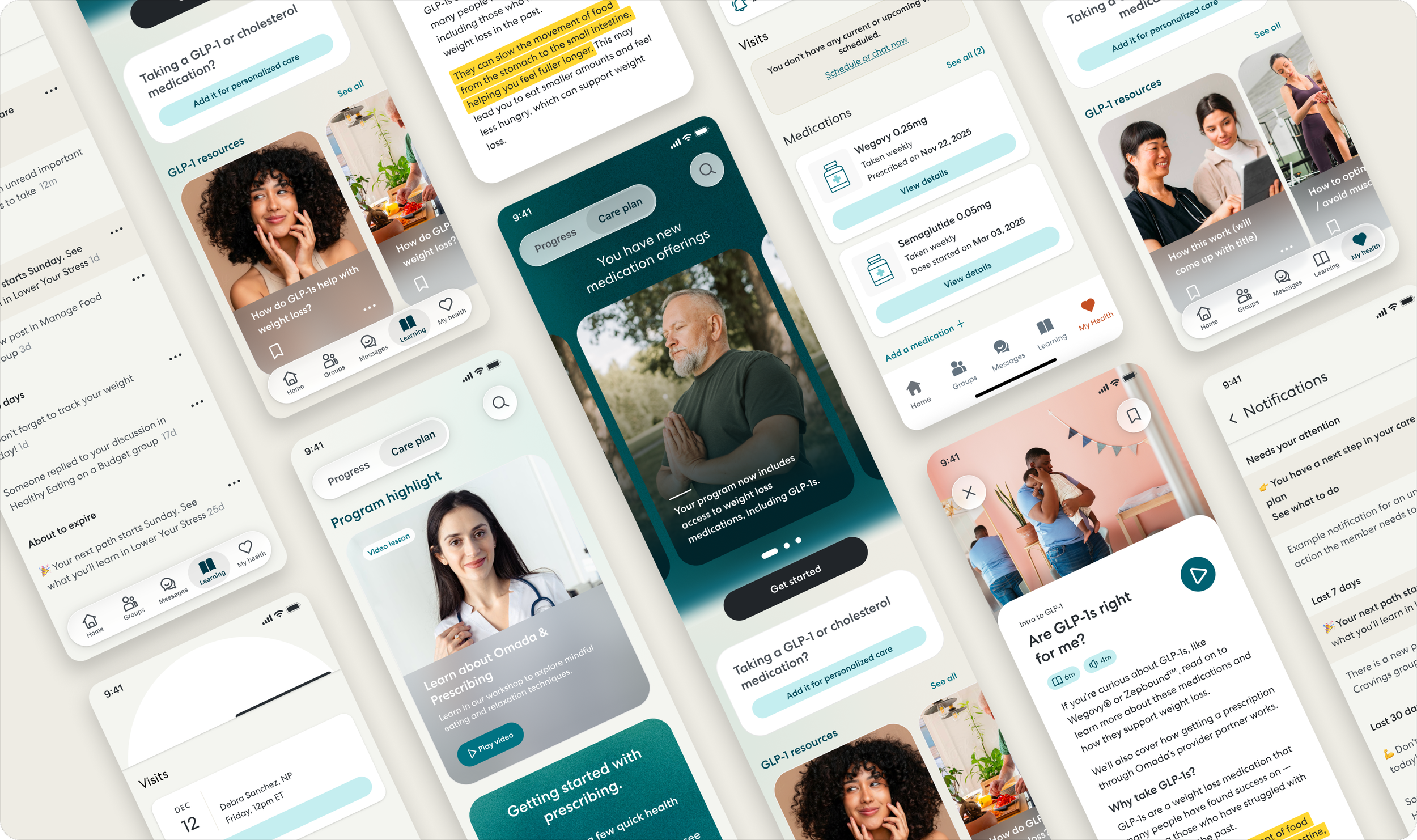
The design work was grounded in a research that included member interviews who had taken GLP-1s, surveys from a pilot program, and external data:
Members came in with two distinct mindsets: those who saw GLP-1s as a last resort after years of failed attempts, and those who treated it like any other tool to try. These groups had very different needs from the program.
Getting access to a GLP-1 was already complicated and frustrating. Anything that added friction or felt like an arbitrary barrier made trust erode fast.
The medication created a real opening for behavior change. With food noise quieter, members were more receptive to building habits — the foundation for
Omada's value prop that behavior change and medication together drives long-term success.
02. Designing Across the Member Journey
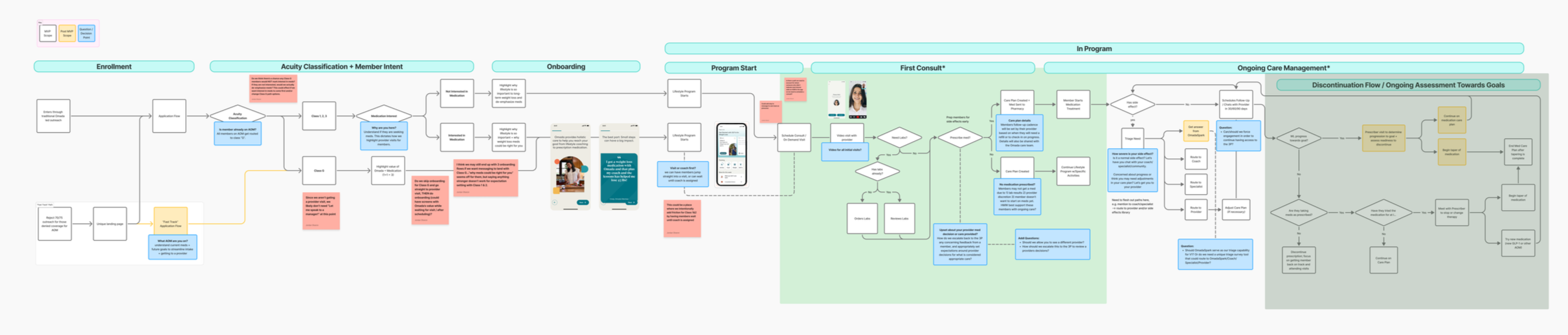
The prescribing program required designing across six distinct member moments, each with its own challenges.
Pre-enrollment needed to set honest expectations before members ever entered the app. For members already on a GLP-1, this meant making it clear upfront that their existing prescription would no longer be covered before they found out the hard way at the pharmacy.
Onboarding had to tell a different story depending on where each member was in their GLP-1 journey. Members already on medication needed a fast path to getting unblocked. Members who were interested but undecided needed a balanced path that made GLP-1 access available without pushing them toward it. Members who weren't interested didn't need to hear about medication at all. Across all three, onboarding had to consistently communicate that behavior change and medication together is what makes Omada different.
The prescribing experience from the initial visit through refills and notifications had to feel seamless despite being built on a third-party integration. This meant being deliberate about what was essential for launch versus what would come in a future native experience.
Member navigation needed to make it effortless for members to get answers across a complex ecosystem of providers, pharmacies, and labs without feeling lost or passed around.
Refills and labs required that no member ever showed up at the pharmacy or a follow-up visit unprepared. Guidance had to be clear and handoffs between systems had to feel effortless.
The care plan page required envisioning the north star of what the prescribing hub should ultimately become: a single place that could serve four different member segments with different levels of readiness and intent.
03. My role
I was one of two product designers on this project. My scope and contributions included:
Designing for onboarding and part of the prescribing experience
Collaborating with the other designer on the care plan page north star vision leading the visual design and content architecture
Collaborating closely with clinical, engineering, and product teams throughout the project
Driving decisions beyond my immediate design scope, including pushing to have GLP-1 prescribing notifications including a separate team's notification center workstream to bring cohesive experience
03. Onboarding
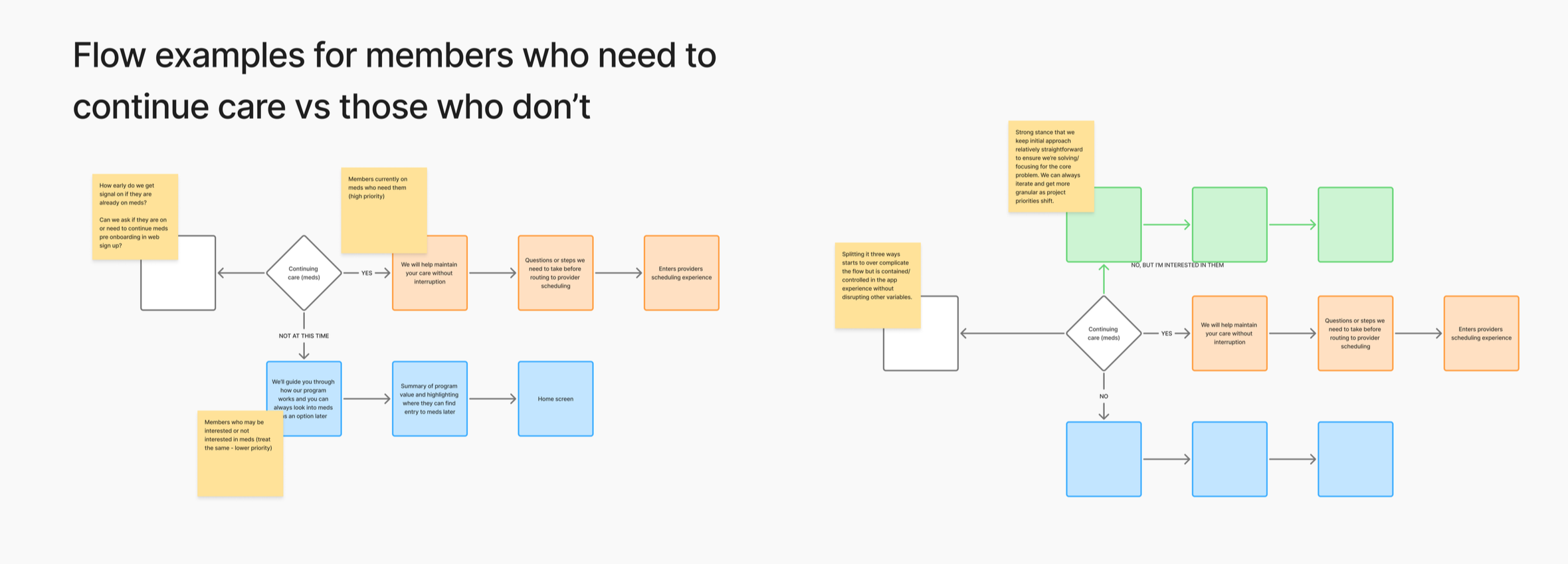
To ensure great member experience, we need an early/highly visible entry point for high priority member needs (continuing meds). We also needed a persistent entry point for all the existing members to introduce attention to in other ways (notifications, timed dynamic tiles, email, Lesson introduction, etc)
04. Prescribing Experience: Medication Cards
I designed six flows across three levels of GLP-1 interest (already on a GLP-1, somewhat interested, not interested) and two member types (new and existing).
The most critical flows were for members already on a GLP-1. We absolutely needed to avoid an experience where a member goes to the pharmacy to pick up their medication and finds out they can't because of an insurance change tied to Omada. Not only it the member couldn’t get their meds, but it’s likely to have negative first impression of Omada. Getting ahead of that moment through clear, empathetic expectation setting was the primary design job for this segment.